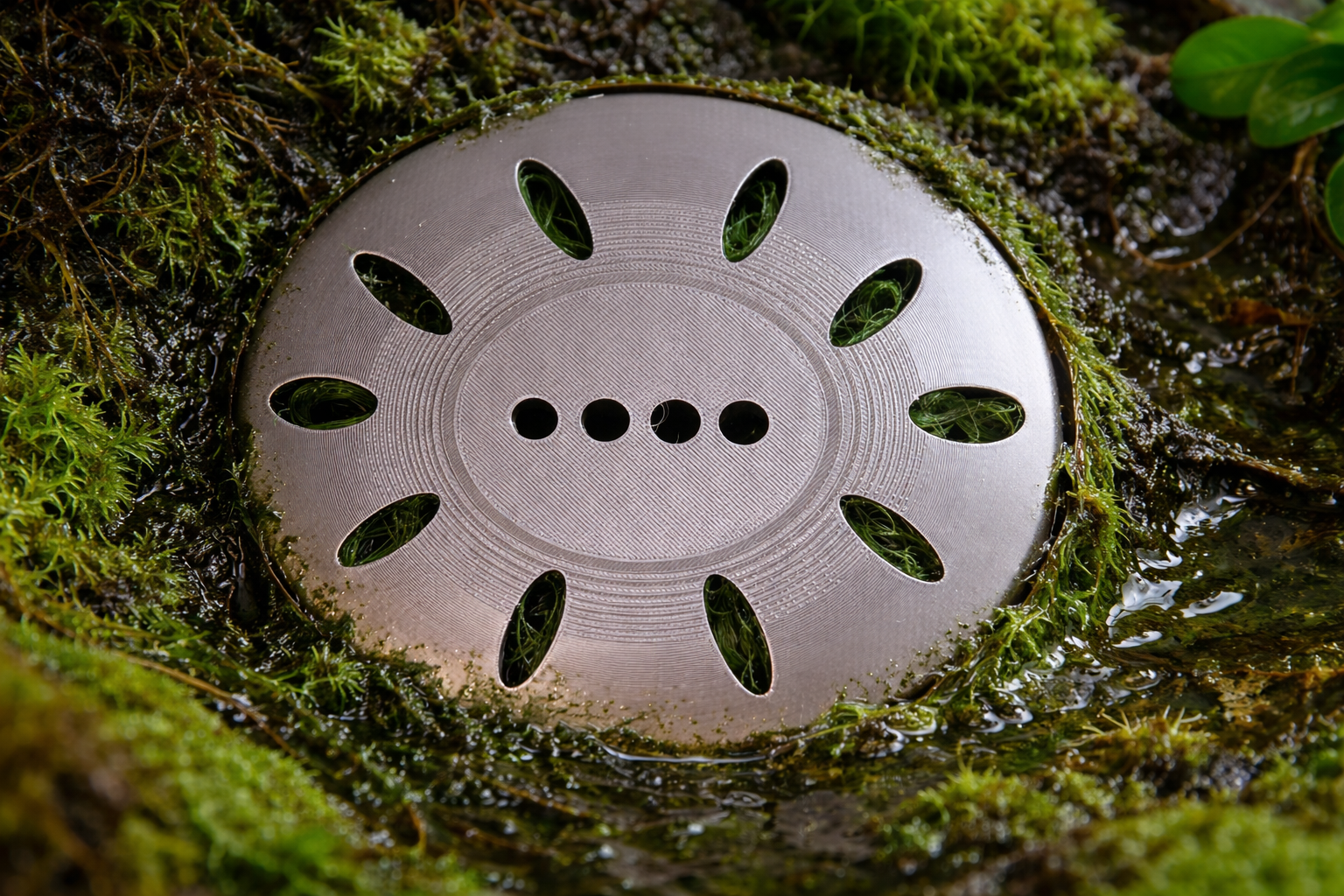
AERA is a wall-mounted bio-infrastructure system designed for a speculative future where food scarcity has made conventional nutrition inaccessible to most of the population. It houses a living algae colony that continuously harvests CO2 from the surrounding air, converts it through photosynthesis into nutritional organic compounds, and disperses the output as a fine mist that people absorb by breathing it in through the nose and mouth as they move through shared spaces.
It requires no user action, and no external power source beyond light. The name comes from the Latin root for air, which is both the system's input and the medium it delivers through.
The scenario AERA responds to imagines a near-future city where a fungal outbreak has collapsed agricultural systems, pollution has become a tradeable economic resource concentrated in the hands of those in power, and AI governance has automated most civic infrastructure. .
The people most affected are not lacking CO2 or sunlight. They are lacking access to systems that could convert what is already abundantly around them into something the body can use. AERA is built around that gap.
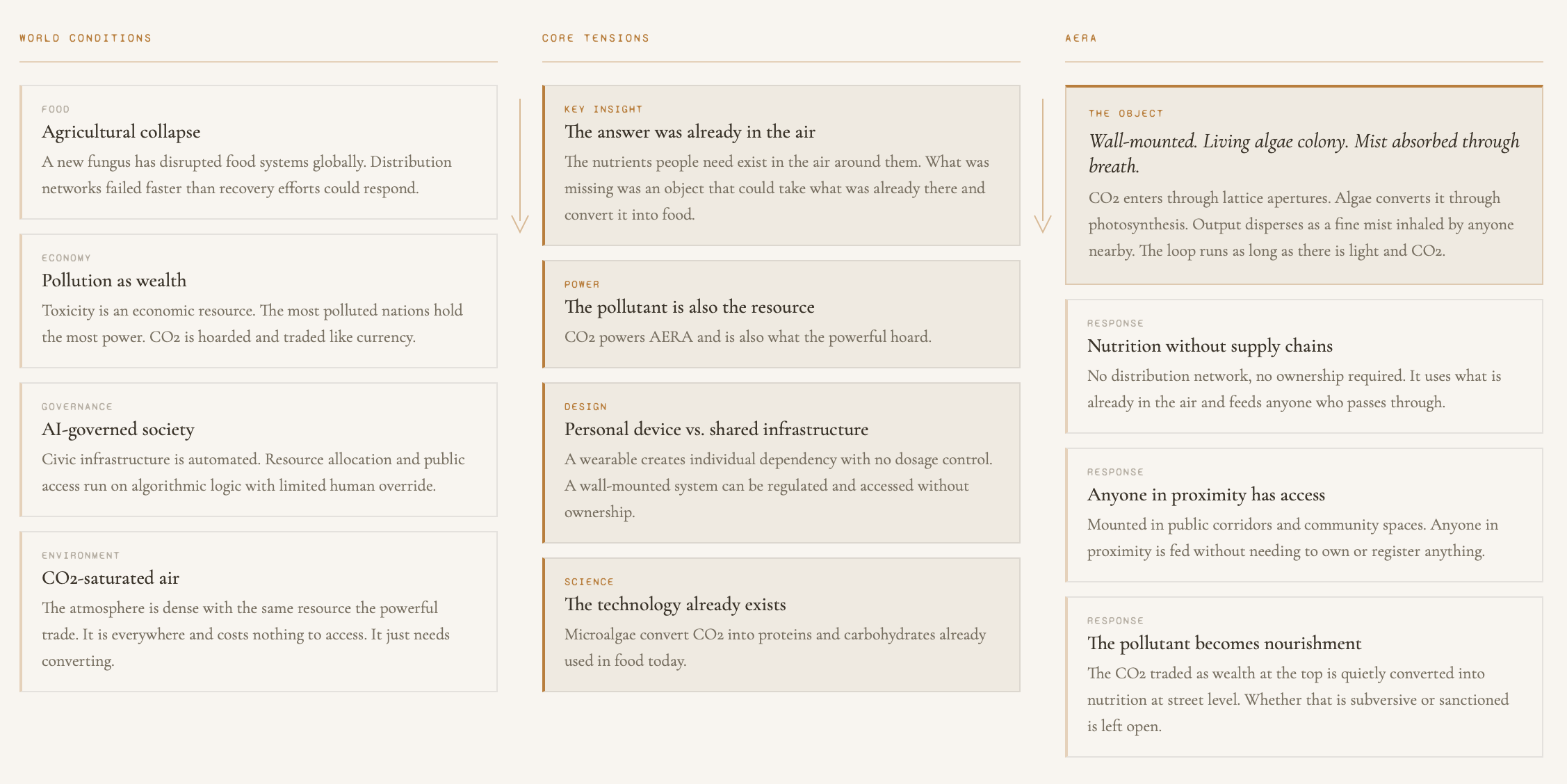
Food scarcity was the core problem in the scenario. The question was whether a real biological process could deliver nutrients outside of traditional food systems. Microalgae answered that. They capture CO2 through photosynthesis and convert it into proteins, fatty acids, and carbohydrates already used in human food today. A 2024 study confirmed this at scale, and species like Spirulina are already in food products because of it.
The first iteration placed the harvesting mechanism on the body itself, exploring what it would mean for a person to carry their own nutrition system. A wearable device creates individual access but it also creates individual dependency. It also raised a harder problem. A body-worn system with no regulation mechanism has no way of knowing when a person has received enough or too little food.
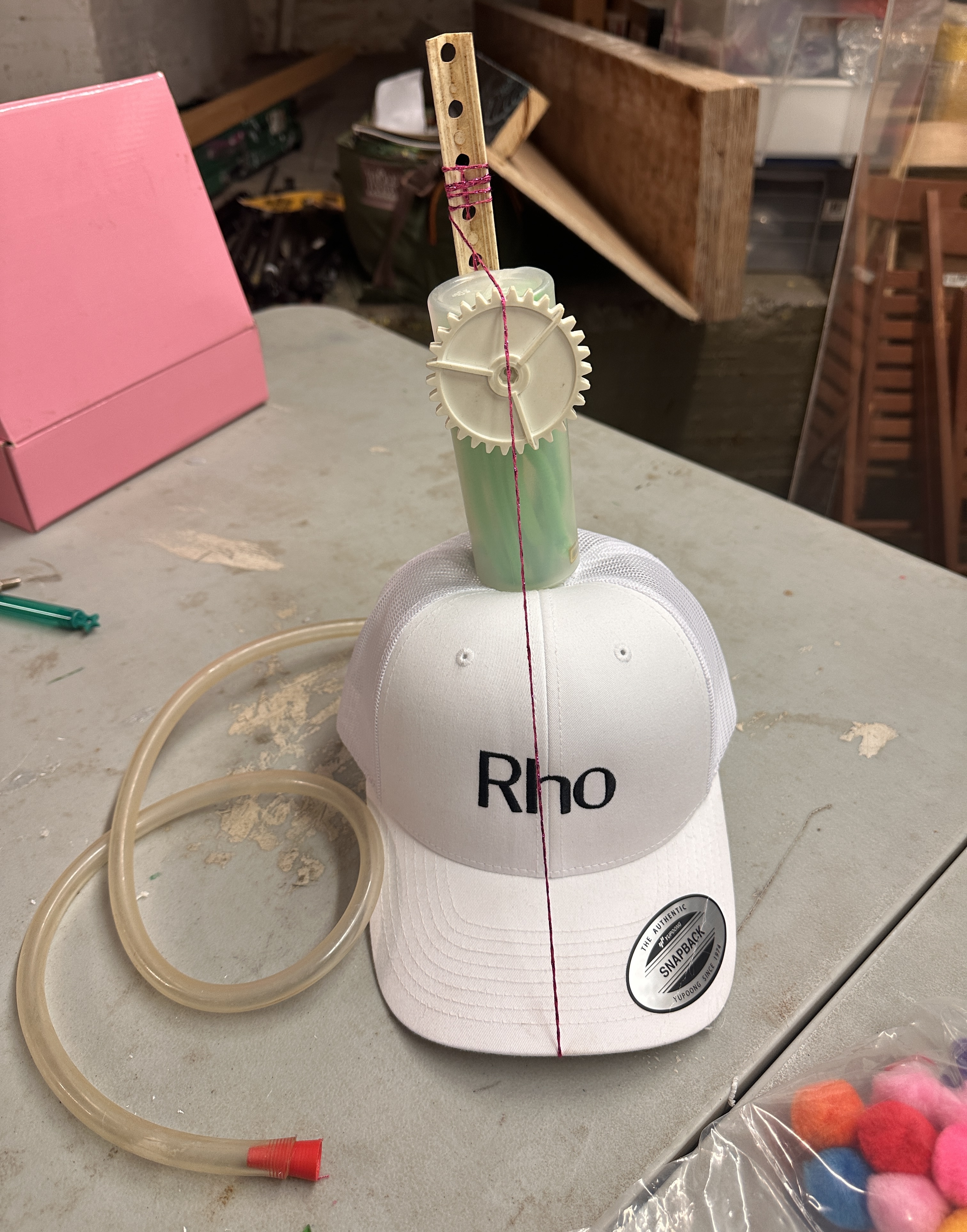
Iteration 1. A rough prototype placing the harvesting mechanism above the head, built from a hat, plastic tubing, pipe cleaners, and a found gear component.
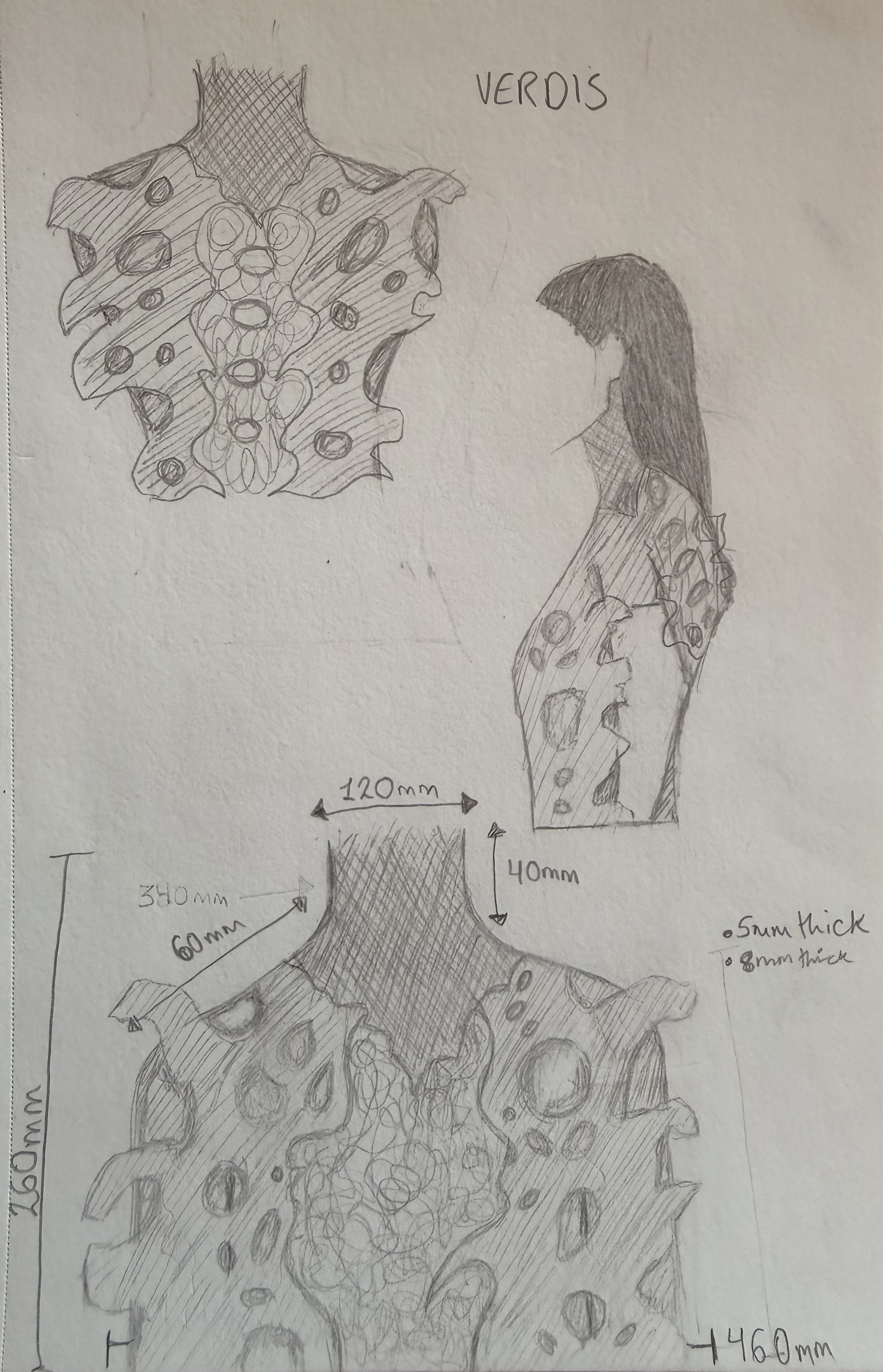
Early sketches exploring body placement, looking at how the device might sit on the neck, shoulders, and chest to stay close to where breath actually leaves the body.
A wall-mounted model solved both problems. Positioning AERA as shared public infrastructure rather than personal equipment meant it could serve anyone in proximity without requiring them to own or maintain anything.
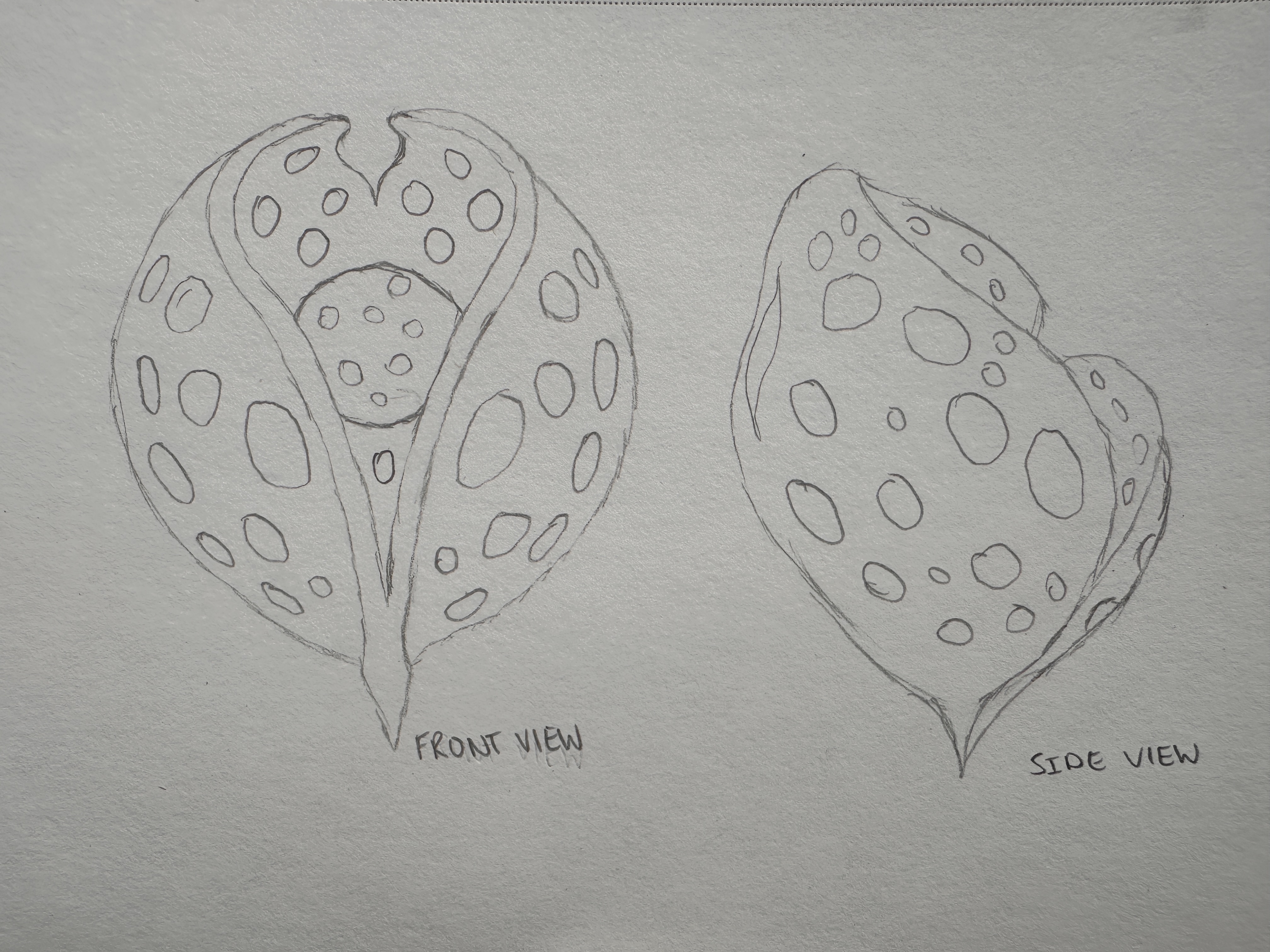
Dome-shaped pod concept with the algae colony housed in the interior chamber, a lattice of apertures through the surface, and a central nozzle for mist dispersal.
3D model developed in Shapr3D, exported as STL for FDM printing. Aperture sizing varied organically to allow natural airflow while housing the algae colony.
CO2 enters through the lattice apertures from ambient air. The algae colony, housed in the interior chamber, absorbs that CO2 and converts it through photosynthesis into proteins, fatty acids, and carbohydrates. The central nozzle releases the output as a fine mist that disperses into the air within a roughly two-meter radius. Anyone moving through that space absorbs the nutrients transdermally. The loop is continuous as long as there is light and CO2 present.
AERA was photographed outside and indoors to see how it would look if it existed in the world.
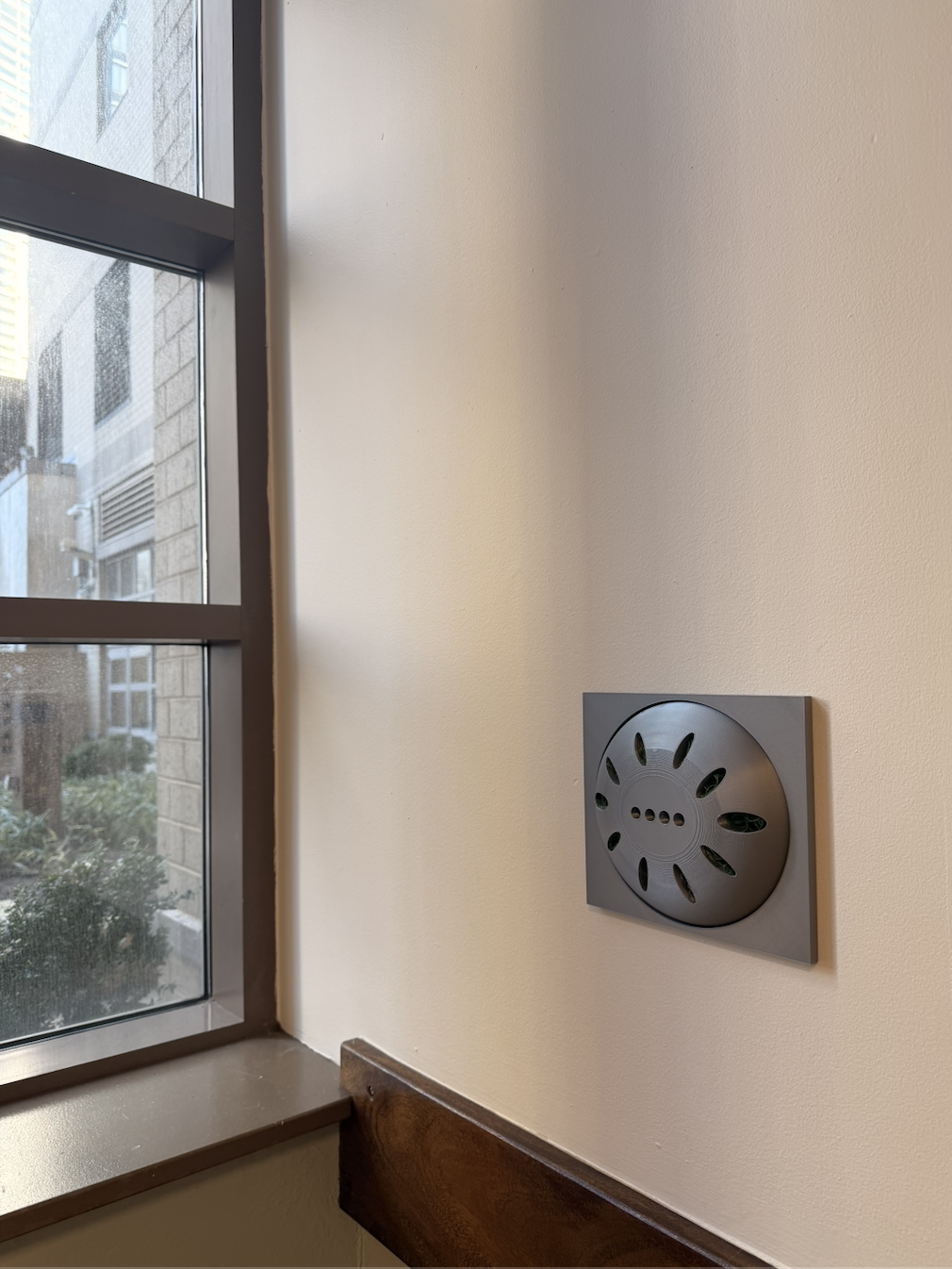
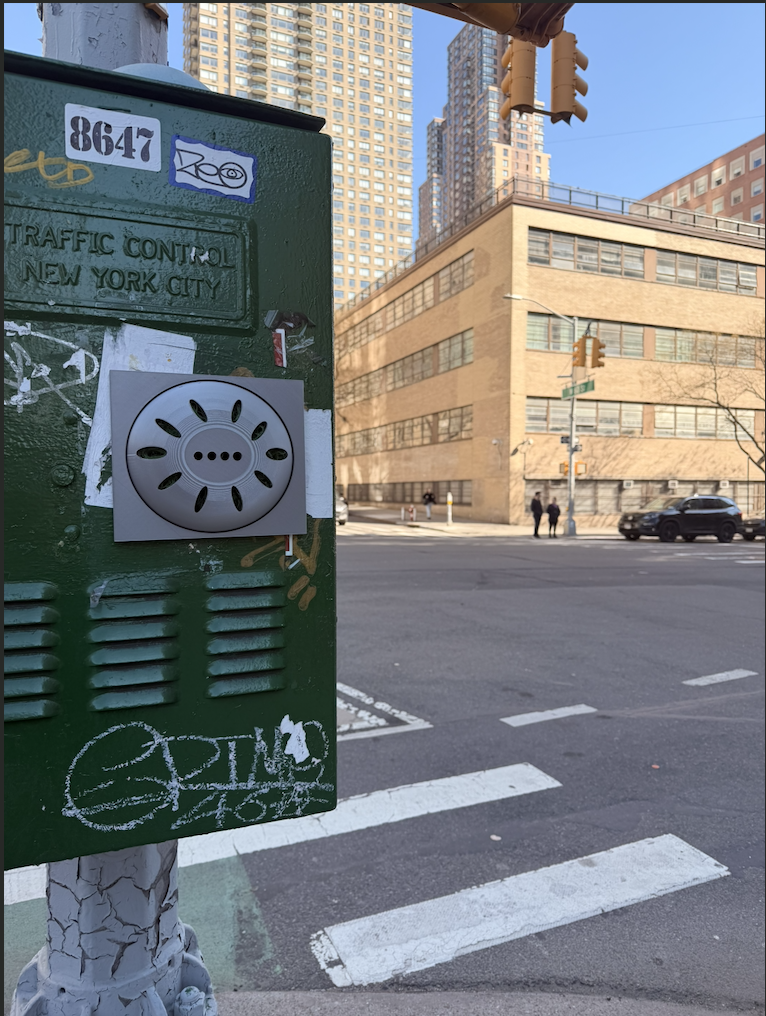
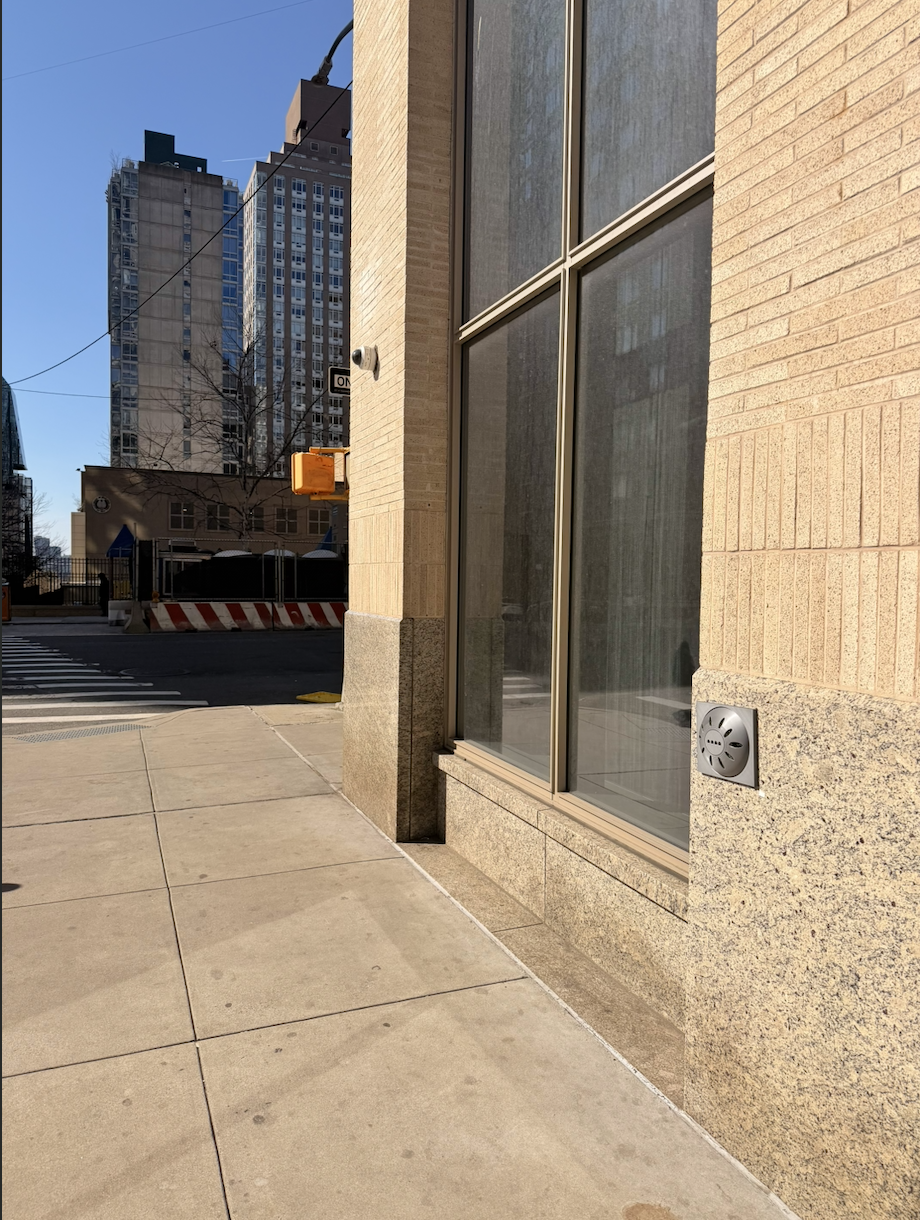
Going into this project the assumption was that the 3D modeling and fabrication would be the hard part. It turned out the opposite was true. The physical making was the fastest part of the process. The idea took longer, went through more versions, and required more rethinking than the print did. That reframed how I think about where the real work in a design process actually lives.